
The Historical Roots of Minimalist Footwear in East Asian Martial Disciplines: A Deep Dive into Tradition and Function
The concept of minimalist footwear, celebrated today across Western fitness and wellness circles, is not a modern invention but a profound philosophical and practical cornerstone of traditional East Asian martial and moving arts, particularly in China. The simple canvas slipper with its thin, flexible sole represents far more than a basic shoe; it is a critical piece of training equipment, a historical artifact, and a quiet testament to centuries of accumulated knowledge regarding human biomechanics and the crucial connection between the foot and the ground. To truly understand the value of this design, we must trace its lineage back to the earliest known practices of Kung Fu, Tai Chi Chuan, and Qigong, exploring the socio-economic, environmental, and philosophical factors that converged to create this enduring piece of equipment. The journey begins in an era where footwear was a reflection of necessity, where high-tech materials were nonexistent, and where the primary goal was seamless, unimpeded movement.
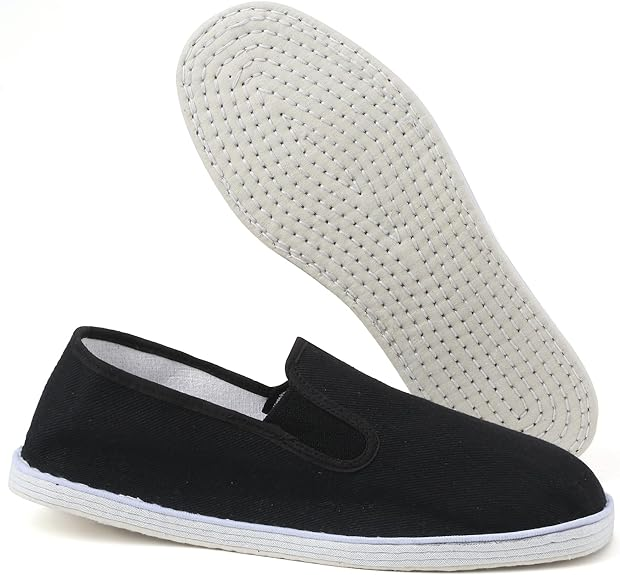
In ancient and dynastic China, particularly among the common people, simplicity in clothing and gear was the norm. Martial arts were often practiced by monks, soldiers, and peasants—groups whose resources necessitated durable, repairable, and multi-purpose gear. The footwear needed to transition effortlessly from dusty paths to temple courtyards and training halls. Leather was expensive and stiff, wooden clogs were impractical for fluid motion, and heavy boots hindered the low stances and complex footwork characteristic of many Northern and Southern styles of Chinese martial arts. What emerged was a design based on readily available materials: cotton canvas for the upper and layers of densely pressed cotton or thin rubber for the sole. This construction was inherently minimalist, not by ideological choice, but by practical necessity. The cotton sole, in particular, was a stroke of genius, offering a unique blend of silent movement, breathability, and ground feedback. It allowed the foot to feel the floor’s subtle texture, temperature, and hardness, information vital for maintaining “rooting”—the central principle of stability and power generation in internal martial arts. The absence of a heel drop or extensive cushioning meant the body’s natural alignment remained undisturbed, encouraging practitioners to distribute weight evenly through the heel, ball, and toes, a fundamental aspect of cultivating internal energy, or Qi.
The philosophical integration of this footwear is perhaps even more compelling. Arts like Tai Chi, founded on the principles of balance, yielding, and continuous flow, require practitioners to become intimately aware of their weight distribution. The shift of weight from one foot to the other must be conscious, slow, and perfectly controlled. A thick, modern sole dampens the sensory input, insulating the practitioner from the very ground they seek to harmonize with. In contrast, the thin canvas slipper acts as a sensitive membrane, transmitting micro-adjustments back to the nervous system. This direct feedback loop accelerates the learning process, forcing the body to rely on intrinsic stabilizers—the small muscles of the foot, ankle, and lower leg—rather than external shoe support. This focus on internal strength and awareness mirrors the core tenets of the martial art itself. The shoe becomes a teaching tool, subtly penalizing poor balance or sudden, jerky movements by emphasizing any instability. This continuous self-correction ingrained in the practice environment led to generations of martial artists with exceptionally strong, mobile feet.
The history is further colored by the cultural context of the training spaces. Many traditional training halls, especially in temples or rural schools, featured polished stone, packed earth, or wooden floors. The cotton-soled shoe provided a silent, non-marking grip on these surfaces. This silence was not just about stealth—though that was certainly a military advantage—but about cultivating a sense of calm and focused intention. A practitioner could move through complex forms without creating distracting noise, enhancing the meditative quality of the exercise. This element of quietude fostered discipline and reverence for the training space. Furthermore, the shoes were designed to be incredibly durable despite their light materials. The layered cotton soles, often stitched and pressed together, could be surprisingly long-lasting, though they required diligent care and were typically reserved for indoor or dry practice. Their affordability also meant they were accessible to the masses, contributing to their widespread adoption across various martial disciplines, cementing their status as the default, traditional footwear for internal arts. The enduring legacy of this simple shoe proves that in the pursuit of physical mastery, sometimes the most advanced technology is the one that disappears entirely, allowing the human body to perform its natural function unimpeded. This history reminds us that true performance comes not from maximizing external support, but from cultivating internal, foundational strength.
https://www.amazon.com/Martial-Cotton-Canvas-Numeric-Footwear/dp/B0CNBZQSC2/ref=sr_1_2?crid=2P4OGHG4ZKV3A&dib=eyJ2IjoiMSJ9.scVo0uE75AfWQcELJVta_KQ5_G_GDUKfGf-b3p8lVfBb6WmGn3tKoFLKVvz8YX-gbbbPi7jr21Yot1AWwdvcfDxw20XKG0SLEi1MvRAJLVmzi_nB8r6ZkTrQVUUarbrg_dbjZkOfacW0JC2X2JprJEKsXlNEbogb721iBsHNfb5quCyDRX9pJITxrLRoRmJCMpe9Ihc_SEDAsykp-hwiSoKrS2EeRoO3r1WUNy1qy7RiAN4HndxiGjGf03AoaGvVUH2yZLZTOL0mmxOvH69U_INLeDWujYWvXIEW_-5HsVE._YoQ8Dlj-nzQfD-owxFAA0dR2L_SgmGvwM6uHVz89fw&dib_tag=se&keywords=%E5%B8%83%E9%9E%8B&qid=1763780391&sprefix=%2Caps%2C422&sr=8-2&th=1&psc=1